Celebrate Music in our Schools Month with Daria


What a special treat I have for you today!


Daria, a gifted musician who believes that music is food for the body, mind and soul, shares her talents with children around the globe.  Several weeks ago, she offered to do a guest post on my blog.  As you can imagine, it took me less than a second to accept her offer!


Children love music…they enjoy singing and playing instruments and, if you’ve ever watched young children dance; you’ll have seen how their entire bodies are involved in the activity.  Music is another tool we can use to help children develop a positive self-image.  Thank you so much, Daria, for all that you do in your mission to spread music to children around the globe!


So, without further ado, Daria is sharing several awesome ideas to help us celebrate Music In Our Schools Month.  Make sure you read through to the end…because she is also giving away several amazing posters.


 MUSIC IN OUR SCHOOLS, PRESCHOOLS AND HOMES THIS MONTH 


Making music is one of those wonderful “can do” activities to share with your children.  Even the youngest toddlers can shake a rattle, clap to a beat or craft a simple instrument with you.  Together you can do the simple actions of Itsy Bitsy Spider or the motions to Kumbayah.  Or they can offer you the names of their friends to be used in a slightly different version of “Oh Susannah”.  With very little work and a whole lot of fun, you can incorporate some great musical play into your home, school or home-school day.  Check out some of the ideas below as well as DARIA’s fun KIDS MAKE MUSIC poster give-away! 


THE QUIETEST RATTLE – SHARING MUSIC AND LEARNING TO LISTEN

Ask any pre-k or kindergarten teacher – mixing arts and crafts and music generally makes for a big hit in the classroom.  One fun activity perfect for this age group is creating really quiet rattles. 


The project is simple.  Have each child bring in any recycled container, preferably a see-through one and have a few extra so no one is left out.  You can decorate the outside with stickers or wrap a handle with pipe-cleaners or yarn before you are ready to fill them.  Here’s the tricky part.  You want to find lots of things to put in the rattles that are really quiet.  The teacher can have some examples of rattles that are not so quiet for comparison (see our suggestions below) and then challenge the children to fill theirs with something that will make noise but still be very quiet.  Q-tips, salt, tiny pasta, cotton puffs, confetti?  Each makes a different quiet sound that helps kids practice the art of listening.  When you’re done, make sure you seal each rattle with a strong tape (such as electrical tape) which ensures the contents will not get out.  Then your class can use their new instruments to play along to quieter music.  The kids can pay attention to how the rhythms of their rattles fit into the music they are hearing.


You can even have a contest in the classroom and reward all entries or ask the kids for their suggestions about which of the teachers rattles would win a “Quiet Contest”.   Stack up a variety of rattles and the class can guess which might make the softest sound. 


Here are some favorite choices for rattle-making:


Quiet rattles: sand, salt, sugar, confetti, cotton balls, craft puff balls, paper bits, Q-tips, tiny pasta (such as pastina or acine de pepe). 


Medium Rattles:  paper clips, small pebbles, birdseed, small beads, small dried beans, rice, smaller buttons.


Loud Rattles:  dried macaroni/pasta, large pebbles, large beads, coins, large dried beans, and larger buttons.


BE A GUIRO HERO – MAKE MUSIC WHILE SHARING LATIN-AMERICAN CULTURE AND LANGUAGE


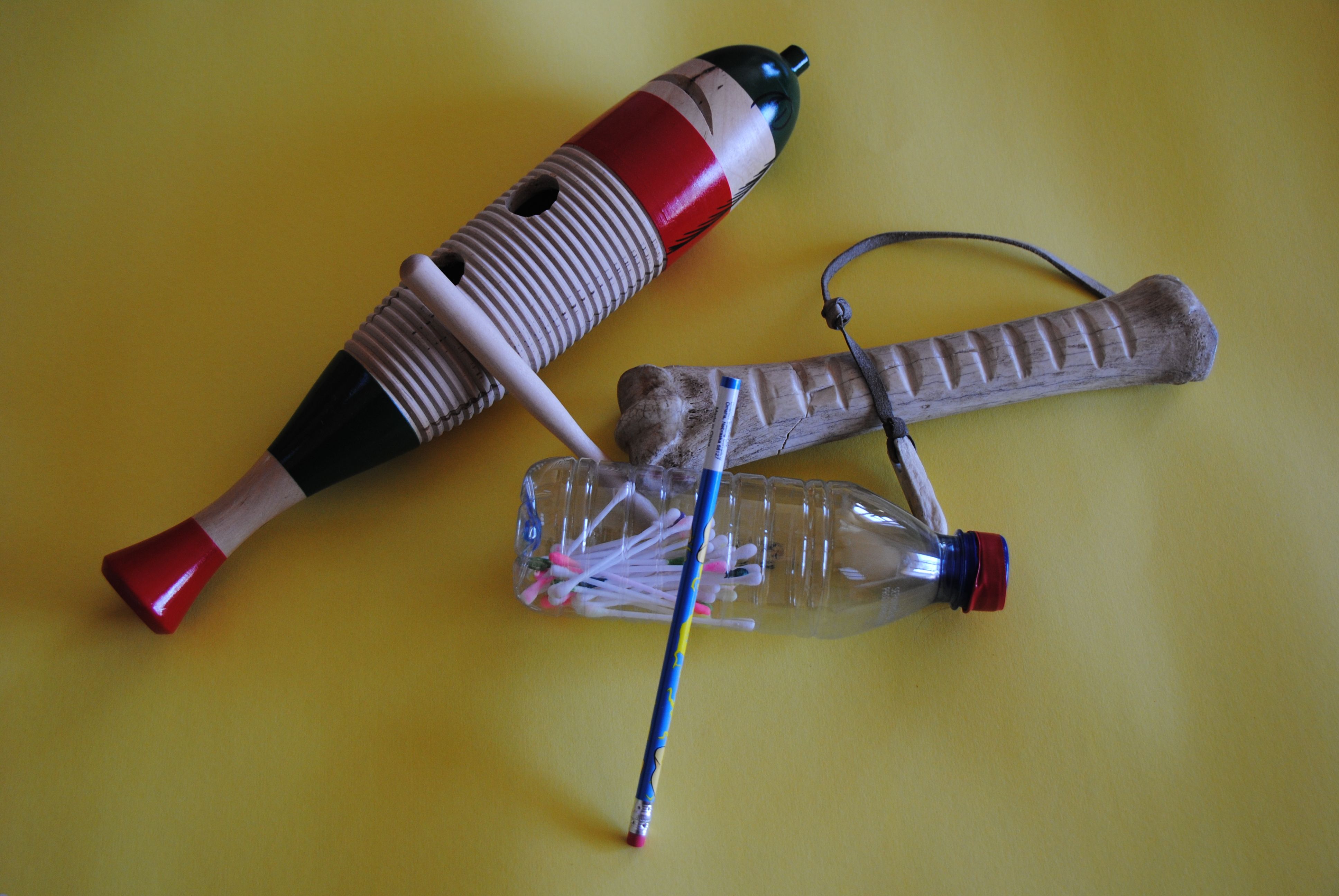
Creating a simple guiro can be a fun way to share Latin-American culture, a bit of Spanish language and music-making skills at the same time.  A guiro is any small percussion instrument that has ridges which are scraped or rubbed creating rhythmic patterns.  The craft below shows you how to make one from an unsharpened pencil, a recycled water bottle (with ridges) and some string or other decorating material.  It’s easy, fun and sounds great! You can see, hear and color a guiro as well at the link below.


When you’ve completed your instruments, you can play them along with any simple songs in Spanish such as the counting song: uno, dos tres amigos (one and two and three good friends) or try the Spanish version of the Itsy Bitsy Spider (La Araña Pequeñita).  Or what about La Cucaracha?  Below you’ll find a link of a video of my version of La Cucaracha with Spanish and English lyrics, complete with dancing cockroaches (cucarachas) that actually play their guiros!


SEE, HEAR OR COLOR A GUIRO:

http://www.dariamusic.com/guiro.php


MAKE A GUIRO INSTRUCTIONS:

http://www.dariamusic.com/make_Guiro.php


La Cucaracha Video (with Spanish and English Lyrics)

www.vimeo.com/dariamusic/la-cucaracha
 

A WHIMSICAL WASHBOARD – FOR CREATIVE MUSICAL FUN


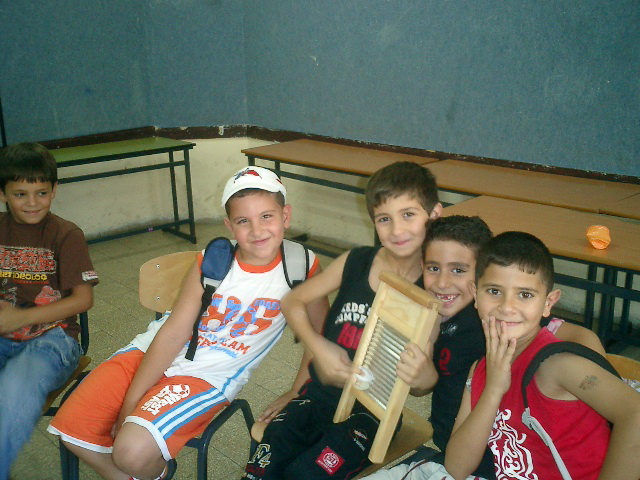
What can be used to make music?  Practically anything!  The musical washboard is proof that people have found creative ways to make music from all kinds of interesting objects. You can see, hear, color or find complete directions on making a kid’s size washboard from easy classroom materials at the links below.


Once you’ve made your own washboards, you can play along to any music but they sound particularly good with old-time music and classic songs like Grand Old Flag, You Are My Sunshine or This Little Light of Mine.  And you can make some best-loved songs new.  You can sing “Oh Susannah” with the names of your students instead (singing a different version each day or each time with a new student’s name so no one is left out).


Do you have a folksong or popular kid’s song that you want to teach your class? This is a great way that the kids can sing and play along with a favorite song at the same time.


SEE, HEAR OR COLOR A WASHBOARD:

http://www.dariamusic.com/washboard.php


MAKE A WASHBOARD INSTRUCTIONS:

http://www.dariamusic.com/make_Washboard.php


AN ALBUM OF FAVORITE SONGS FOR KIDS – GRANDCHILDREN’S DELIGHT

http://www.dariamusic.com/cd_grandchildren.php


Although March is Music In Our Schools Month, there are no limits to how this powerful and powerfully fun tool can be shared at any time of year.  Feel free to inspire your children through song…chances are good that you will have a happy and harmonious day!


——————————–

Find Out More About MUSIC IN OUR SCHOOLS MONTH:

www.menc.org/events/view/music-in-our-schools-month


Check out DARIA’s World Music For Kids website:

www.dariamusic.com.


Check out DARIA’s Tiny Tapping Toes BLOG

(Music For The Very Young)

tinytappingtoes.wordpress.com


Check out DARIA’s Making Multicultural Music BLOG

(Sharing Diversity Through The Arts)

http://makingmulticulturalmusic.wordpress.com


A WORLD OF MUSIC FOR KIDS – POSTER AND POSTER GIVE-AWAY


To celebrate Music in Our Schools Month, DARIA has created a “WORLD OF MUSIC FOR KIDS” poster and poster give-away. 


If you’d like to win, please leave two comments…one on Daria’s Making Multicultural Music Blog at www.makingmuslticulturalmusic.wordpress.com and one on this post about why you love music or the impact music has made in your life and/or your child’s life.  Five lucky winners will receive a World of Music for Kids poster.


We also encourage you to sign up for Daria’s monthly e-newsletter (http://www.dariamusic.com/monthly_song.php ) so you can get free mp3’s each month, news of other contests, crafts, activities, and other musical fun.
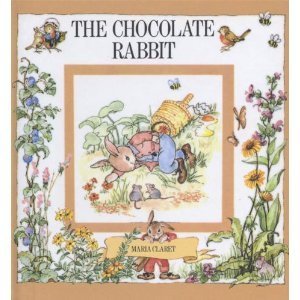
Building Self-Esteem: The Chocolate Rabbit


Today is Perfect Picture Book Friday where I link up with Susanna Leonard Hill’s fantastic group of writers who contribute a picture book review and related resources. 

I’m always looking for books with characters who are engaged in self-esteem building.  Not only is this the case with my selection today, but the book is also a perfect choice for the upcoming holiday of Easter.  I know that parents and teachers will enjoy the simple eco-friendly craft project at the end of my review.

Do you know where the first chocolate Easter bunnies were made?  Here is the scoop, according to picture book author and illustrator, Maria Claret.


The Chocolate Rabbit

Written and illustrated by Maria Claret

Translated by Jane O’Sullivan

Publishers: Barons Juvenile (originally published in Spain)

Ages: 2 – 8

Themes: Mastering tasks and skills, Easter, crafting, dealing with disappointment, family togetherness

Opening: “Not so very long ago, the Rabbit family lived in a little town not far from here.”

Synopsis:  Bertie Rabbit and his sisters want to help their artistic father who paints beautiful Easter eggs, but they are too young.   Bertie decides he is old enough to help his father and buys eggs with his own money, intending to decorate them and surprise his father.  The little bunny is sadly disappointed when he trips and the basket tips over, breaking all of the eggs.  Bertie’s mother makes a pot of chocolate to lift her son’s spirits…but when Bertie climbs up for a taste, disaster strikes and Bertie is covered in lukewarm chocolate.  Bertie’s father looks at his son and has an ingenious idea…chocolate bunnies! 

Why do I like this book

Success often comes on the heels of failure!  I love books that encourage children to keep on trying as they learn to master tasks and skills.  Self-esteem is not built with empty praise…it is developed and strengthened as young children learn to do things for themselves.  A child’s sense of self-worth increases as he takes these important steps…and learning to deal with disappointment is one of those steps.  This is a sweet story about working together as a family…relevant with the busy hectic pace many families experience today…each family will find their own unique ways of spending quality time together.

The illustrations are charming…they remind me of Beatrix Potter’s work.

Related Activities:

Child Care Lounge has quite a few lovely Easter crafts as well as bunny poems here

Angel Fire has an Easter/Spring Unit with many book and craft and cooking ideas here.

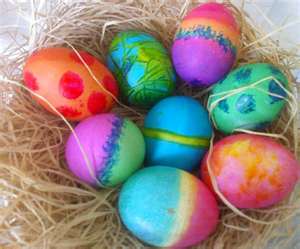
Mama-Knows (colored egg picture below) has lots of recipes for coloring Easter eggs here.

Children love arts and crafts!  Here is an activity that will please every eco-minded parent.

PAINTING EASTER EGGS WITH NATURAL DYES


You will need: Hard-boiled white eggs (cooled), Q-tips, one or more of the following depending on how many colors you want: ¼ cup blueberries (blue), ¼ cup cranberries (red), 1 tsp tumeric (yellow), markers, a small bowl for each color, cover-ups, two small pots and water to boil.

1.      Cover the work surface and workers to protect from staining (wear disposable plastic gloves if desired).

2.      Boil ½ cup water, add crushed blueberries, simmer for 5 minutes and then pour into small bowl and let cool for a few minutes.  Do the same for the cranberries.

3.      Pour 1 tsp tumeric and ½ cup hot water in a small bowl, stir and let cool.

4.      Put an egg into each bowl and let sit for 5-10 minutes, turning several times with a spoon.  Then lift each egg out and let dry.

5.      Use markers to add designs.

6.      Tip: while waiting for the eggs to absorb the color, go on a color-naming hunt throughout your house…how many red, blue and yellow items can your child find? 


This post is part of a series for parents and teachers called Perfect Picture Book Fridays hosted by Susanna Leonard Hill.  Click on her link and find lots of other picture book suggestions with summaries and activities.

Perfect Picture Book Friday: One of the Problems of Everett Anderson

Today is Perfect Picture Book Friday where I link up with Susanna Leonard Hill’s fantastic group of writers who contribute a picture book review and related resources every Friday.

But first,I want to announce the February PPP Reading Challenge picture book winner.  It was lovely to see what some of you were reading to your children.  I know how difficult it is to find the time to post your comments.  And the winner is….AngelaMarie…she is a very talented poet and artist as well as a mom.  Please take a minute and visit her beautiful blog: One-In-Creation.

And now, on to my Perfect Picture Book Friday selection.

When I first read this story several years ago, I decided to use it as one of the hundred picture books that are recommended in Show Me How! I followed the same procedure with One of the Problems of Everett Andreson as I had with all of the other books so that I could write to the author and illustrator and let them know how highly I regarded their book.  I searched the internet for contact information and found out that Lucille Clifton was a professor at St. Mary’s College of Maryland, in addition to being Maryland’s poet laureate.  Unfortunately, by the time my letter was routed through the proper channels, Ms. Clifton had passed away.  A copy of Show Me How sits on the shelves of the library at St. Mary’s College…a section of the dedication page reads: “Lucille Clifton (June 27, 1946 – February 13, 2010) American poet, writer, educator and author of One of the Problems of Everett Anderson.  She was a voice for children who had no one else to speak for them.”


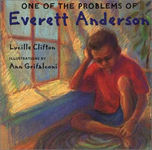
One of the Problems of Everett Anderson

Written by Lucille Clifton

Illustrated by Ann Grifalconi

Publishers: Henry Holt and Company

Ages: 4 – 8

Themes:

Child abuse, helping others, friendship, boys

Opening:

“Everett Anderson sits at home wondering what he should say or do.”

Synopsis:  

Here is the summary from the Parents’ Choice Awards website:

        This is author Lucille Clifton’s eighth book featuring a thoughtful, small black hero facing the everyday problems of growing up in a complex world. Here, sotto voce, she confronts the problem of child abuse as Everett Anderson makes a new friend at school and worries because, daily, Greg arrives with a new scar or bruise mark on his leg. Everett could tell his teacher, but “I’m afraid in case he asks me what I mean and I don’t know exactly.” He also doesn’t want “to make it bad for Greg or for his mom and dad.” Everett’s mother counsels her son to listen to Greg “and hug and hold his friend.” And the listener to this affecting tale has the feeling that Everett’s mother may try to help Greg in other ways. This is a book that could prove invaluable in initiating classroom discussions of a widespread problem that deserves wider recognition and attention.


Why do I like this book:

The illustrations are soft and compelling.  The text breaks your heart and makes you want to go out and save every unfortunate child who has to deal with abuse.  This is a widespread problem in our society…here is a book that can open the door to discussion and honest revelations.  We can empower young children, not only to speak up for themselves, but also to reach out and help others.

Related Activities:

Children love making their own books.  An activity like this one builds reading readiness skills in very young children and develops stronger literacy skills in older ones. 

You will need: One piece of construction paper, two or more pieces of white copy paper, markers or crayons, stapler or hole puncher and ribbon.

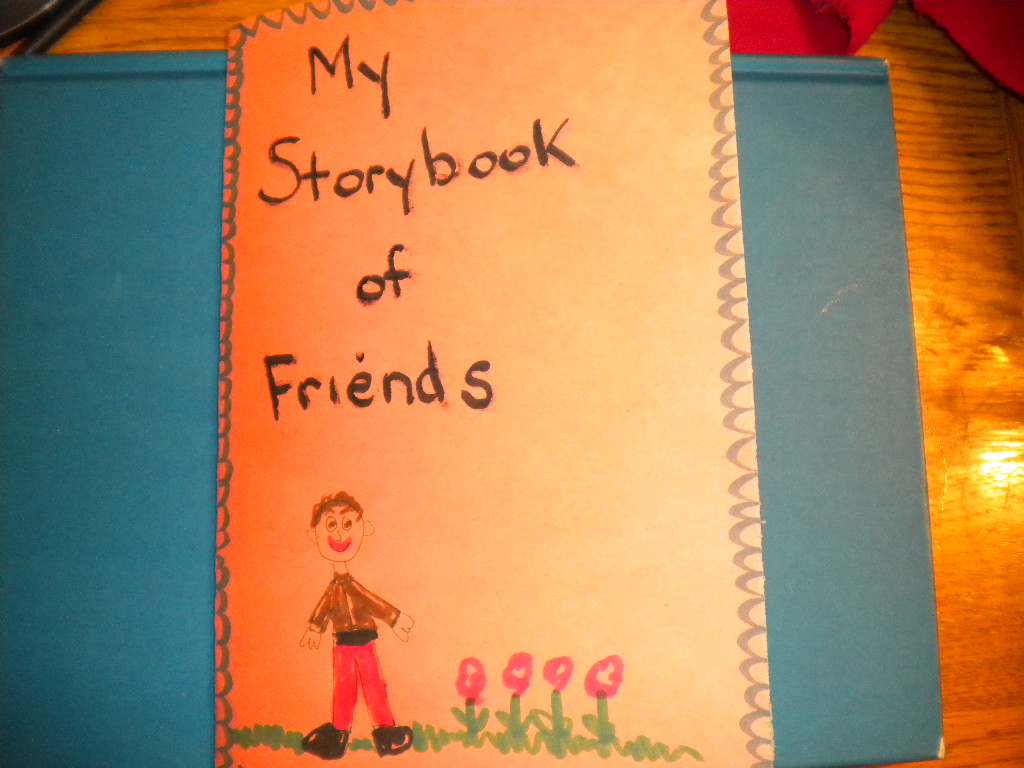
1.      Fold the construction paper in half…this is the cover for the book.  Help your child write the title of his book on the cover.

2.      Fold the pieces of white copy paper in half…insert into the cover and staple along the folded edge or use the hole puncher to make two or three holes through all the papers and string a piece of ribbon through and tie to hold the pages together.

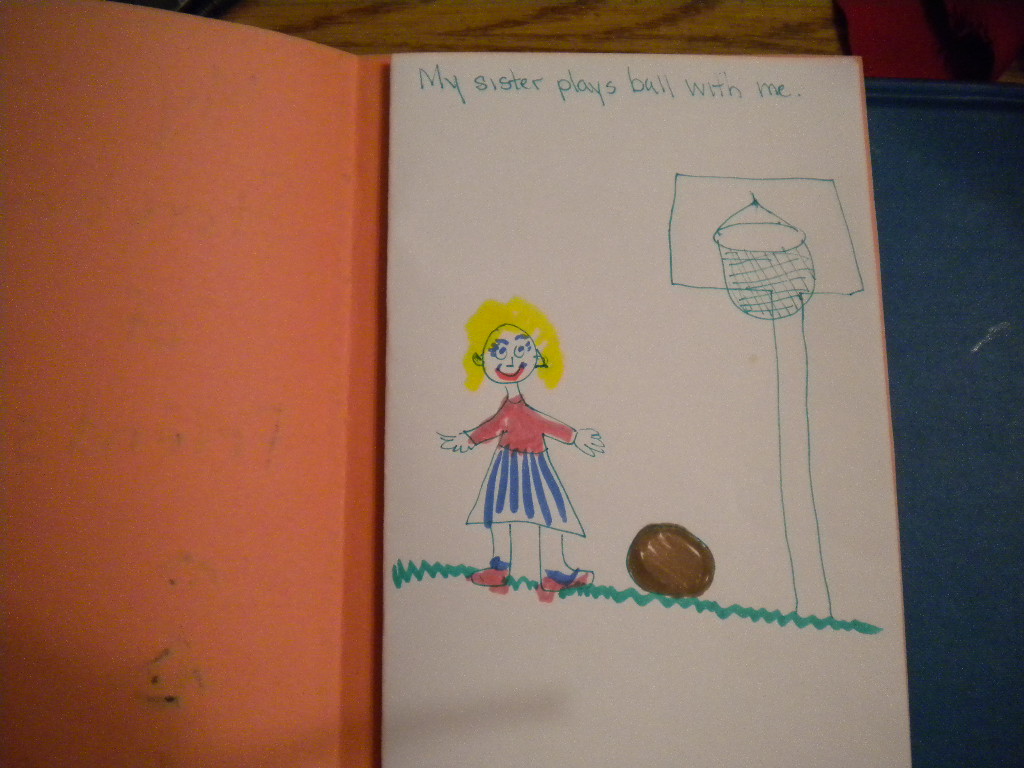
3.      Your child is now ready to make his own storybook of friends.  Encourage your child to draw pictures of his friends on each page.

4.      Ask your child to tell you his story.

Children really get a thrill out of making their own books.   You can use this bookmaking activity in many other ways…have your child cut out pictures from magazines of foods he or she likes, animals, etc.  Your child will have a collection of handmade books that he or she can read to you.

Other activities:

Puppets definitely lend themselves to role-playing and could be used for a follow-up discussion of the book.

Young children love flannel board stories…teachers or counselors can encourage children to discuss this issue using flannel board figures.


This post is part of a series for parents and teachers called Perfect Picture Book Fridays hosted by Susanna Leonard Hill.  Click on her link and find lots of other picture book suggestions with summaries and activities.