
Image via Wikipedia
I speak with parents of preschoolers all the time.
One of the questions that I hear very frequently is, “I want to send my child to preschool. How do I know if he (or she) is ready?”
There are several key indicators we can look at that will help us answer that question. You need to observe your child to see:
1. How well does he interact with others?
If you feel your child has not had enough opportunities to interact with others then:
START SMALL: arrange play-dates with neighbor children of a similar age and attend library story programs. The summer before our youngest son was going to start kindergarten, we enrolled him in a three week nature class that was held every morning at a local nature center. He had not attended preschool or daycare and we wanted to give him a chance to be in a “classroom” setting. This worked out very well and he adjusted to kindergarten very well.

2. Has she been away from you?
If your child has not been away from you at all then
START SMALL: arrange to leave your child with a trusted friend or relative for an hour or so (take a walk around the block or a bubble bath) and enroll her in a library story hour or other local program where she will have other adults who are in charge.
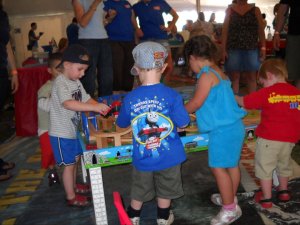
3. How well does he transition from snack to play to story to craft to quiet time?
If your child has not had any experience with this or does not transition well then
START SMALL: during the day, let your child know you will be turning off the TV at the next commercial…tell him it will be naptime after the last page of the book is finished…find opportunities to have your child transition from one activity to another.
4. Can your child’s speech be understood?
Your child should be able to speak in simple sentences of three to five words and be able to describe an activity or event that recently happened. If you think there is a problem, then speak with your pediatrician. If there isn’t a problem, perhaps your child hasn’t had enough opportunity to verbalize.
START SMALL: Give your child opportunities to express himself…when reading a picture book, have your child tell you what is happening on the page and then let your child retell the story to you from the pictures…at the store, encourage your child to describe what he sees. It is so important for us to listen to our children…they really have a lot to tell us.
5. Does your child follow directions?
If your child does not seem able to follow directions then
START SMALL: give your preschooler easy tasks to do…put the plates on the dinner table, help fold the clean towels…when cleaning up the toys, ask your child to put the blue blocks away first or tell her to pick up the book and put it on the couch.
There are two other factors that may have an impact on whether your child is ready for preschool: potty training and age.
Many preschools require students to be potty-trained or almost there. Your preschooler should also be able to put on and take off her shoes and coat, zip up her pants and wash her hands. These are some of the early life-skills your child needs to learn…please be patient…it takes time and practice to grow up and master these tasks.
Regarding age, educators define preschool as the two years before kindergarten. The age minimum differs in preschools…some want the child to be three by December of that academic year, while others will accept two year olds.
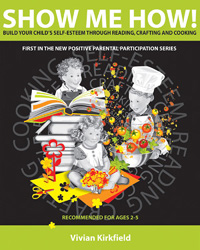
Whatever your decision is about sending your child to preschool, spending time with your child will result in life-long benefits…building self-esteem, developing pre-literacy skills and strengthening the parent-child bond. If you visit my website and buy a copy of Show Me How! Build Your Child’s Self-Esteem Through Reading, Crafting and Cooking, you will be getting a unique activity book/parenting resource/memory book that will provide you with picture book summaries, easy crafts and healthful recipes…even an hour-by-hour schedule that will simplify your day. Using Show Me How will definitely help you achieve your child’s school readiness goals. We offer your money back if you are not satisfied with the contents and the results and the book is on sale now for 50% off the cover price…only $22.50 per copy.



 VIVIAN KIRKFIELD - Writer for Children